
DALF C1 Oral Exam Example: A Full “Production Orale” on Biodiversity

If you are preparing for the DALF C1 and searching for a real example of the speaking exam, this post walks through an actual production orale topic — “L’espèce humaine peut-elle préserver la biodiversité ?” (“Can humankind preserve biodiversity?”) — along with a complete model response you can study, dissect, and use as a template for your own preparation.
Whether you’re working toward C1 for a French university application, a Canadian immigration file, or simply to prove advanced fluency for work, seeing a full worked example is one of the fastest ways to understand what examiners actually expect.
Plus-que-parfait in French: Rules, Formation, Examples & Exercises
The plus-que-parfait is the “past before the past” — it sets up everything else on the timeline.
You already know the passé composé (a completed action) and the imparfait (background, description, habits) — we covered both in detail in our Passé Composé vs Imparfait guide. But French storytelling often needs a third layer: what had already happened before the main past event even started. That’s the job of the plus-que-parfait — the French pluperfect.
This guide covers exactly how to form it, when native speakers reach for it, the mistakes Indian learners make most often, and how it’s tested in DELF, TEF, and TCF Canada.
TEF Canada vs TCF Canada: Which French Exam Should You Take?

if your Canadian permanent residency or Express Entry file needs proof of French, you already know you can’t avoid this choice: TEF Canada or TCF Canada? Both are approved by Immigration, Refugees and Citizenship Canada (IRCC). Both convert your score into Niveaux de Compétence Linguistique Canadiens (NCLC) points. And picking the wrong one for your strengths can genuinely cost you Comprehensive Ranking System (CRS) points, time, and exam fees you don’t get back.
This guide breaks down exactly how the two exams differ — format, timing, scoring, and where each is accepted — so you can walk into registration with a clear target instead of a guess.
Le sujet : “Violence, les écrans en accusation
Mis à jour pour 2026. À l’oral du DELF B2, l’exposé de 3 minutes n’est que la première moitié de l’épreuve. Ce qui fait vraiment la différence entre une note moyenne et une bonne note, c’est le débat de 7 à 10 minutes qui suit — le moment où le jury vous pousse à défendre, nuancer ou reformuler votre position en temps réel. Ce guide reprend le sujet classique “Violence : les écrans en accusation” avec l’exposé corrigé, puis simule le débat avec le jury à travers des questions-réponses type, et termine par une stratégie concrète pour cette phase souvent négligée dans la préparation. Pour le format complet de l’épreuve, voir aussi notre guide de préparation au DELF.
False Friends (Faux Amis) That Trip Up English Speakers
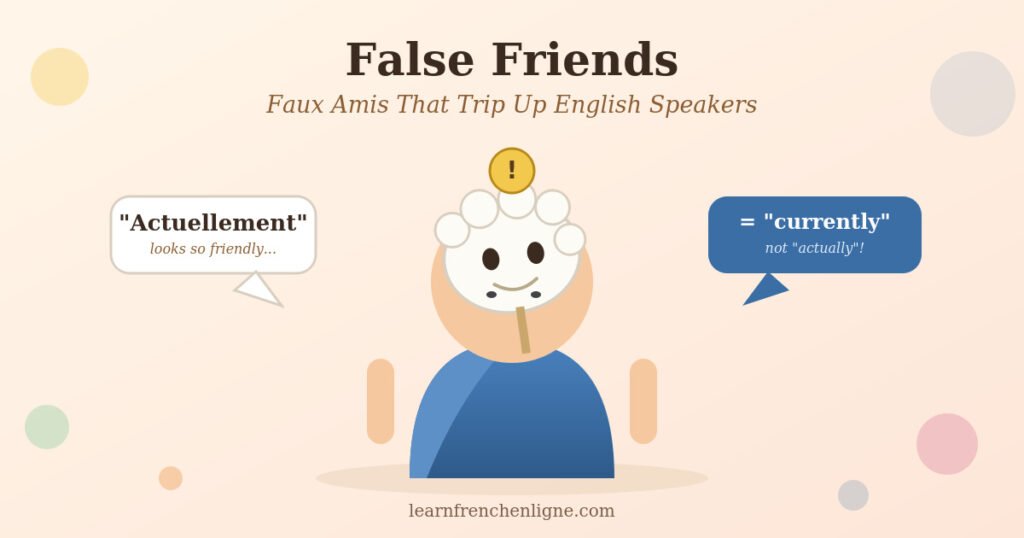
You spot a French word that looks exactly like an English one, so you use it with total confidence — and a native speaker gives you a confused look. Welcome to the world of faux amis, or “false friends”: words in French and English that share a spelling or sound but mean something completely different. They’re one of the sneakiest traps in language learning precisely because they don’t feel like mistakes. They feel like shortcuts.
This guide rounds up the false friends that catch English speakers most often, organized by how badly they can backfire, plus a few tricks for spotting new ones on your own.
French Noun Gender Rules: Patterns and Exceptions Every Learner Should Know
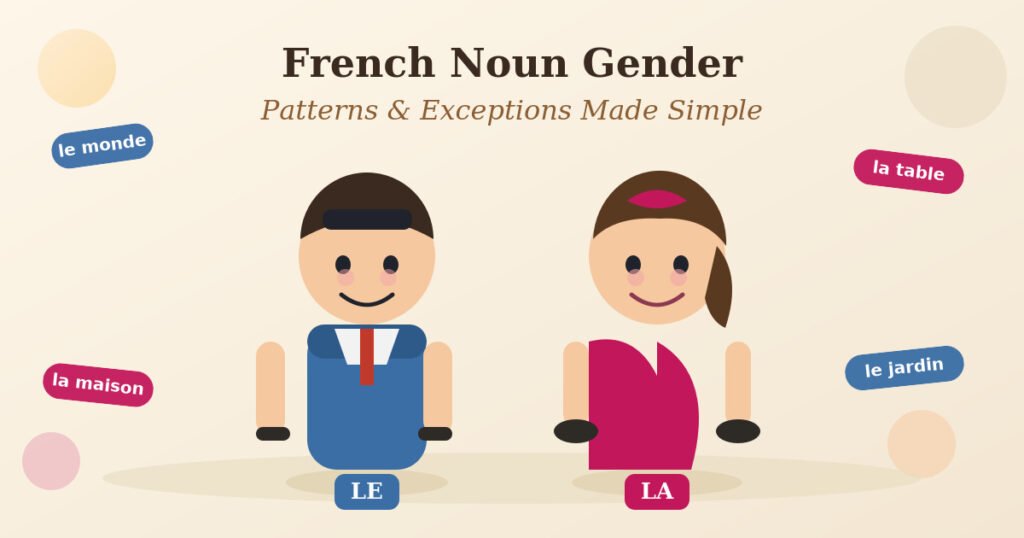
Ask any French learner what trips them up first, and “le or la?” comes up almost every time. Unlike English, every single French noun carries a gender — masculine or feminine — and that gender changes the article, the adjective endings, and sometimes even the pronoun you use later in a sentence. Get the gender wrong and a sentence that should sound natural suddenly feels shaky.
Ne Explétif in French: The “Ne” That Doesn’t Mean No
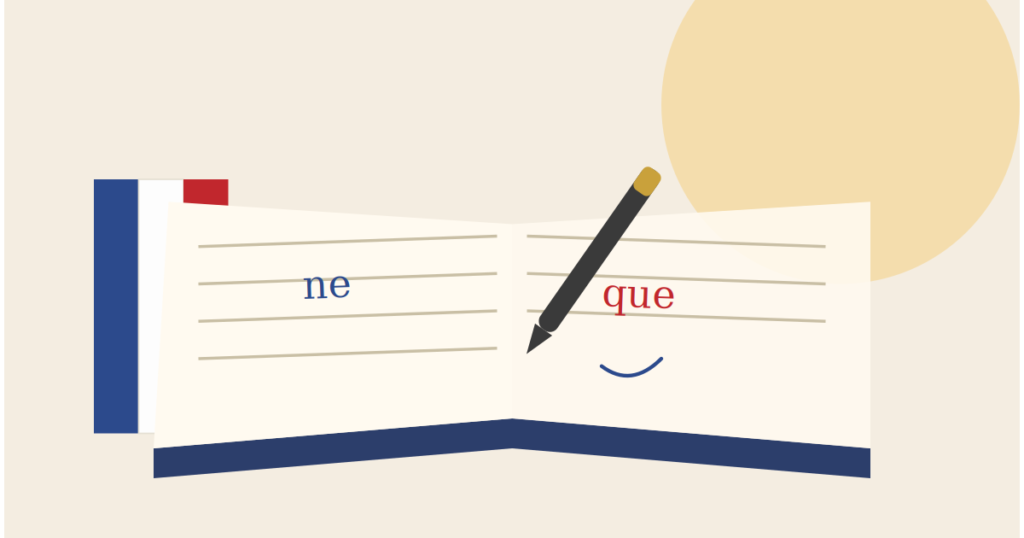
If you’ve ever read a French novel, a formal email, or an advanced listening transcript and spotted a lonely little ne sitting in a sentence that already seems positive, you’re not imagining things — and you haven’t misunderstood the grammar. You’ve just met the ne explétif, one of the most misunderstood corners of French syntax.
DELF B2 Listening Themes A-Z: Vocabulary, Connectors & Sample Phrases by Topic
f you’ve taken a DELF B2 mock test, you already know the frustrating part isn’t French grammar — it’s the moment an interview about inégalités sociales or transition énergétique starts, and half the vocabulary flies past before you’ve even placed the topic. At B2 level, the exam stops testing whether you can survive a conversation and starts testing whether you can follow an argument. That shift happens almost entirely through vocabulary you recognize instantly, not vocabulary you could eventually work out.
How Long Does It Take to Learn French Fluently? A Realistic Timeline for 2026

If you’ve typed “how long does it take to learn French” into Google at 1 a.m. while staring at a TEF Canada deadline, you’re not alone. It’s one of the most common questions we get at Learn French Enligne (LFE), and honestly, the honest answer is: it depends on your level, your consistency, and your goal — a weekend traveller and a candidate targeting CLB 7 for Canada PR are not on the same clock.
TCF Canada Practice Resources 2026: Official Samples, Timed Drills & an 8-Week Study Plan
If you’re preparing for TCF Canada, the hardest part usually isn’t finding practice material — it’s finding the right material and using it on a clock. Candidates often gather dozens of random YouTube clips and PDF dumps, then practise without timing themselves or aiming at a specific NCLC level. That habit is exactly what stalls scores, because the listening section alone gives you 39 questions in just 35 minutes — roughly 54 seconds per item — so decision speed matters as much as vocabulary.