
Common French Grammar Mistakes English Speakers Make (Beyond False Friends)
Faux amis get all the attention because they’re easy to laugh about — until you tell someone you’re “excited” using excité and get a strange look. But if you’ve already read our guide to false friends that trip up English speakers, you know vocabulary is only half the battle. The mistakes that actually keep your French sounding foreign for years are grammatical: gender agreement and prepositions. They’re small, they’re everywhere, and native speakers notice them instantly.
Listening Comprehension (Compréhension Orale) Strategies for DELF, DALF & TEF
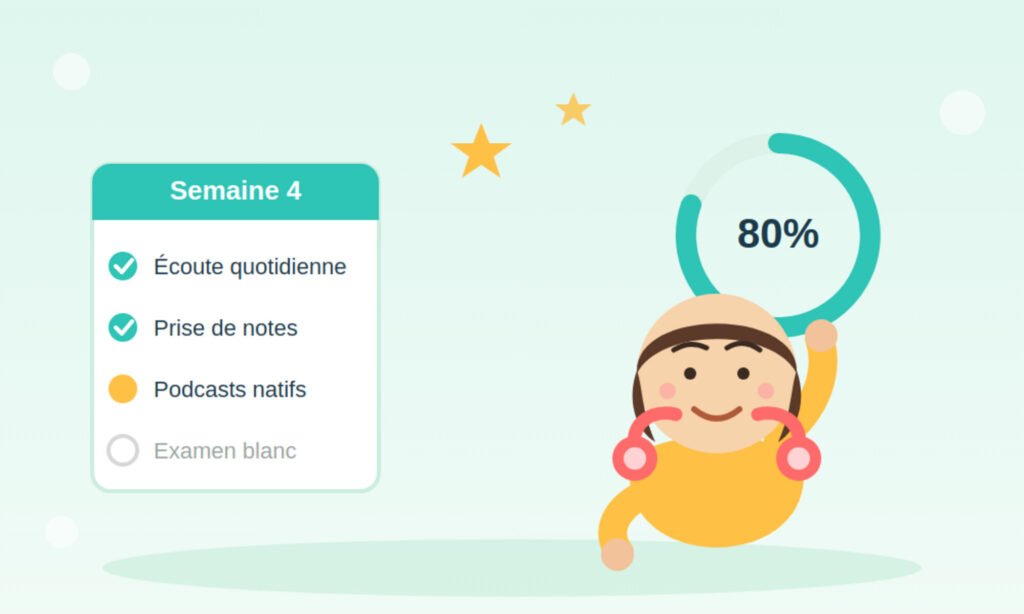
Reading French, you can pause, re-read a sentence, or look up a word. Listening gives you none of that safety net — the audio plays once or twice, at native speed, and then it’s gone. That’s exactly why compréhension orale is the section most French learners say they fear the most, whether they’re preparing for the DELF B2, the DALF C1, or the TEF/TCF exams for Canadian immigration.
Le sujet : “Violence, les écrans en accusation
Mis à jour pour 2026. À l’oral du DELF B2, l’exposé de 3 minutes n’est que la première moitié de l’épreuve. Ce qui fait vraiment la différence entre une note moyenne et une bonne note, c’est le débat de 7 à 10 minutes qui suit — le moment où le jury vous pousse à défendre, nuancer ou reformuler votre position en temps réel. Ce guide reprend le sujet classique “Violence : les écrans en accusation” avec l’exposé corrigé, puis simule le débat avec le jury à travers des questions-réponses type, et termine par une stratégie concrète pour cette phase souvent négligée dans la préparation. Pour le format complet de l’épreuve, voir aussi notre guide de préparation au DELF.
DALF C1 vs. DELF B2: What’s the Real Difference?
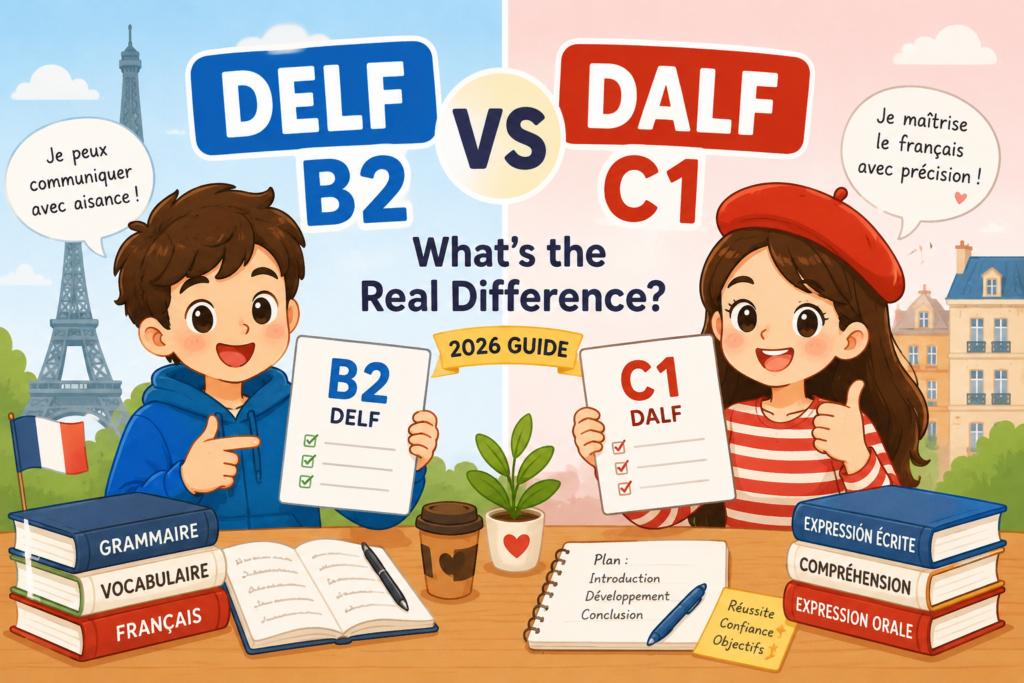
If you’ve been studying French for a while, you’ve probably run into two intimidating acronyms: DELF B2 and DALF C1. Both are official diplomas issued by the French Ministry of Education, both are valid for life, and both are accepted by universities, employers, and immigration authorities around the world. But they are not the same exam, they are not the same difficulty, and choosing the wrong one can cost you time and money.
Si Clauses in French: The Complete Guide to Conditional Sentences
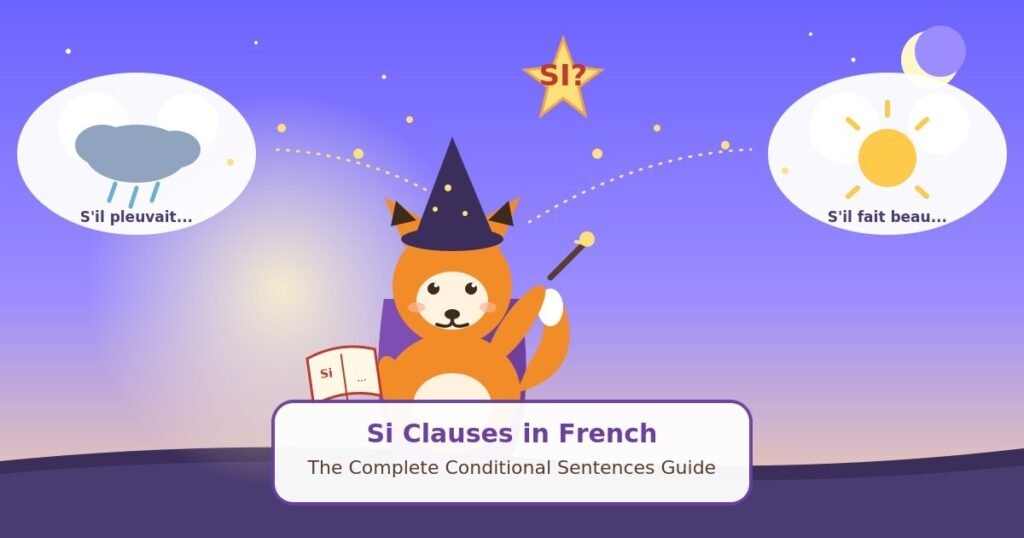
You already know how to say “if I have time” or “if I had known” in English without thinking twice. In French, that same simple word — si — opens the door to one of the trickiest grammar patterns learners face: knowing exactly which tense to pair it with, and which tense to use in the result.
False Friends (Faux Amis) That Trip Up English Speakers
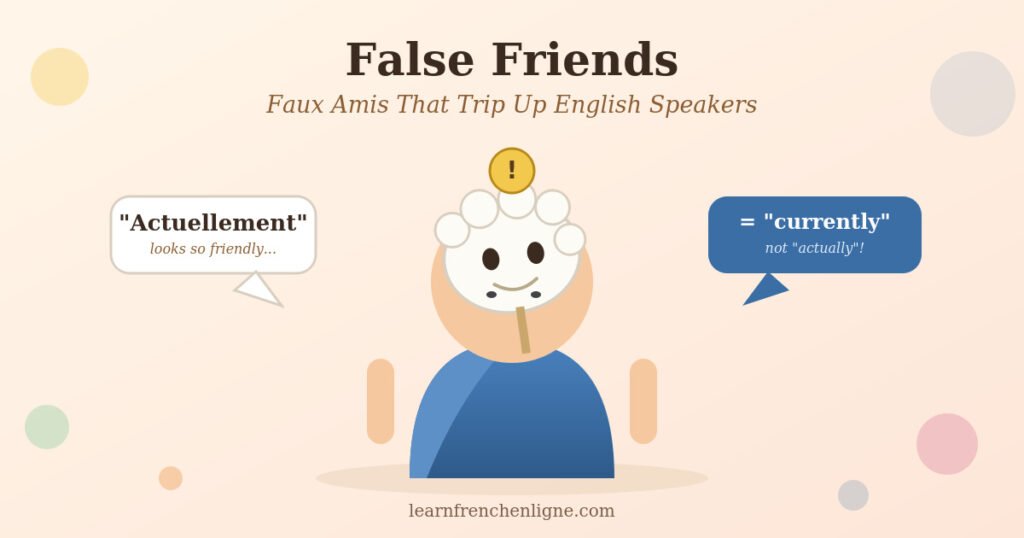
You spot a French word that looks exactly like an English one, so you use it with total confidence — and a native speaker gives you a confused look. Welcome to the world of faux amis, or “false friends”: words in French and English that share a spelling or sound but mean something completely different. They’re one of the sneakiest traps in language learning precisely because they don’t feel like mistakes. They feel like shortcuts.
This guide rounds up the false friends that catch English speakers most often, organized by how badly they can backfire, plus a few tricks for spotting new ones on your own.
French Noun Gender Rules: Patterns and Exceptions Every Learner Should Know
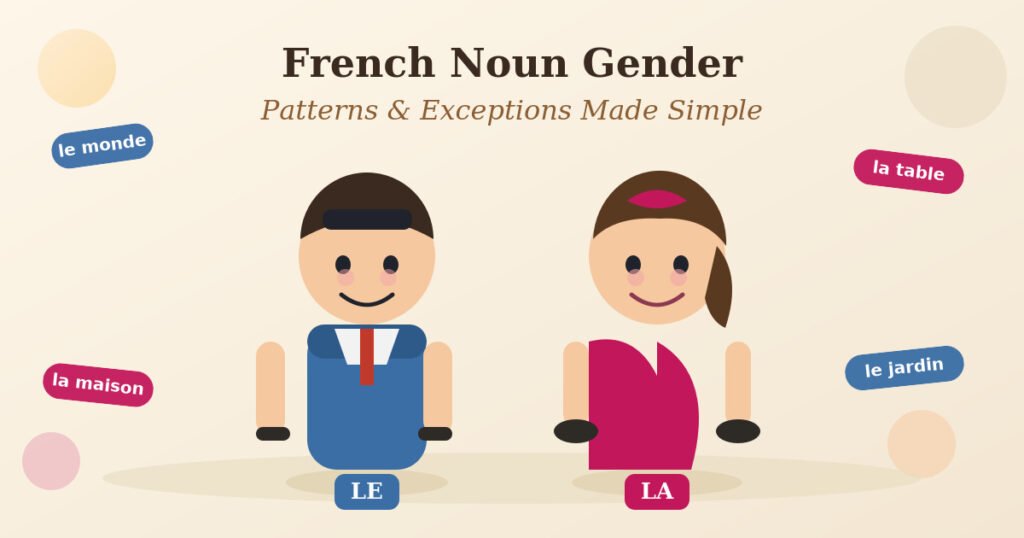
Ask any French learner what trips them up first, and “le or la?” comes up almost every time. Unlike English, every single French noun carries a gender — masculine or feminine — and that gender changes the article, the adjective endings, and sometimes even the pronoun you use later in a sentence. Get the gender wrong and a sentence that should sound natural suddenly feels shaky.
Passé Composé vs. Imparfait: The Ultimate Guide to French Past Tenses

If you’ve ever frozen mid-sentence in French wondering whether to say “j’ai mangé” or “je mangeais,” you’re not alone. The battle between passé composé and imparfait is one of the most common stumbling blocks for French learners at every level. The good news? Once you understand the logic behind each tense, the confusion disappears for good.
DELF Exam Preparation: Format, Strategies, and a Study Plan That Actually Works
If you’re staring down a DELF exam date and wondering where to even start, you’re not alone. The DELF (Diplôme d’Études en Langue Française) is one of the most widely recognized French proficiency certificates in the world, and its four-skill format — listening, reading, writing, and speaking — can feel overwhelming without a clear plan.
Ne Explétif in French: The “Ne” That Doesn’t Mean No
If you’ve ever read a French novel, a formal email, or an advanced listening transcript and spotted a lonely little ne sitting in a sentence that already seems positive, you’re not imagining things — and you haven’t misunderstood the grammar. You’ve just met the ne explétif, one of the most misunderstood corners of French syntax.