
False Friends (Faux Amis) That Trip Up English Speakers
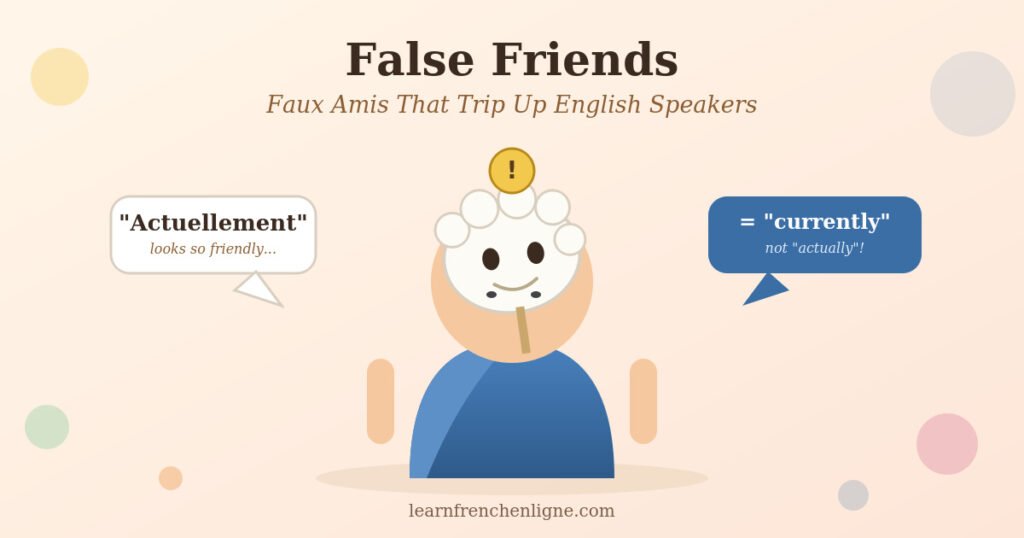
You spot a French word that looks exactly like an English one, so you use it with total confidence — and a native speaker gives you a confused look. Welcome to the world of faux amis, or “false friends”: words in French and English that share a spelling or sound but mean something completely different. They’re one of the sneakiest traps in language learning precisely because they don’t feel like mistakes. They feel like shortcuts.
This guide rounds up the false friends that catch English speakers most often, organized by how badly they can backfire, plus a few tricks for spotting new ones on your own.
French Noun Gender Rules: Patterns and Exceptions Every Learner Should Know
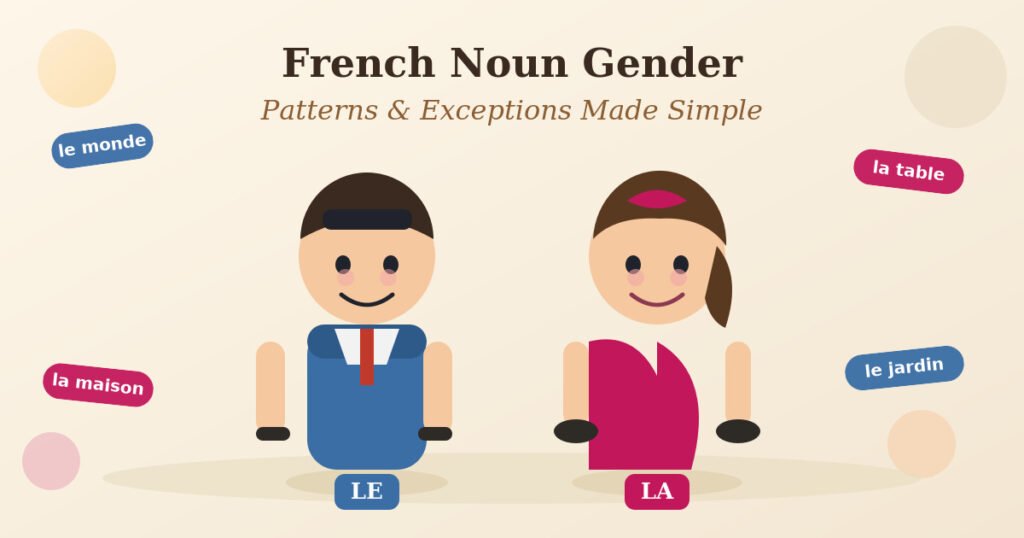
Ask any French learner what trips them up first, and “le or la?” comes up almost every time. Unlike English, every single French noun carries a gender — masculine or feminine — and that gender changes the article, the adjective endings, and sometimes even the pronoun you use later in a sentence. Get the gender wrong and a sentence that should sound natural suddenly feels shaky.
Passé Composé vs. Imparfait: The Ultimate Guide to French Past Tenses

If you’ve ever frozen mid-sentence in French wondering whether to say “j’ai mangé” or “je mangeais,” you’re not alone. The battle between passé composé and imparfait is one of the most common stumbling blocks for French learners at every level. The good news? Once you understand the logic behind each tense, the confusion disappears for good.
DELF B2 Listening Themes A-Z: Vocabulary, Connectors & Sample Phrases by Topic
f you’ve taken a DELF B2 mock test, you already know the frustrating part isn’t French grammar — it’s the moment an interview about inégalités sociales or transition énergétique starts, and half the vocabulary flies past before you’ve even placed the topic. At B2 level, the exam stops testing whether you can survive a conversation and starts testing whether you can follow an argument. That shift happens almost entirely through vocabulary you recognize instantly, not vocabulary you could eventually work out.
TCF Canada Speaking Task 3 Examples: How to Build a Confident Opinion Answer
If you’ve looked at past TCF Canada speaking papers, you already know Task 3 is where most candidates lose marks — not because their grammar is bad, but because their opinion has no clear shape. The examiner is listening for a position, not a list of pros and cons. This guide breaks down exactly how TCF Canada Speaking Task 3 works, walks through full worked examples, and gives you a short practice loop you can start today.
TCF Canada Practice Resources 2026: Official Samples, Timed Drills & an 8-Week Study Plan
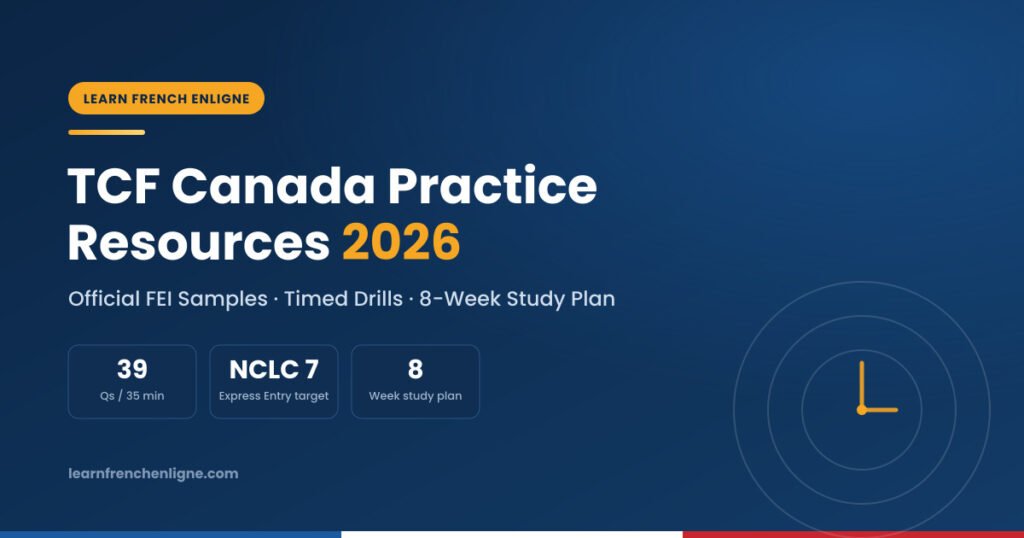
If you’re preparing for TCF Canada, the hardest part usually isn’t finding practice material — it’s finding the right material and using it on a clock. Candidates often gather dozens of random YouTube clips and PDF dumps, then practise without timing themselves or aiming at a specific NCLC level. That habit is exactly what stalls scores, because the listening section alone gives you 39 questions in just 35 minutes — roughly 54 seconds per item — so decision speed matters as much as vocabulary.
If your Express Entry plan depends on French, the quality of your TCF Canada practice matters more than the quantity. Candidates who collect dozens of random YouTube clips and PDF dumps, then rehearse without a timer or a target NCLC level, tend to stall for months. The listening section alone gives you just 39 questions in 35 minutes — decision speed, not vocabulary, is what separates a pass from a retake
TCF Canada Score Calculator 2026: Convert Your NCLC Level Into CRS Points
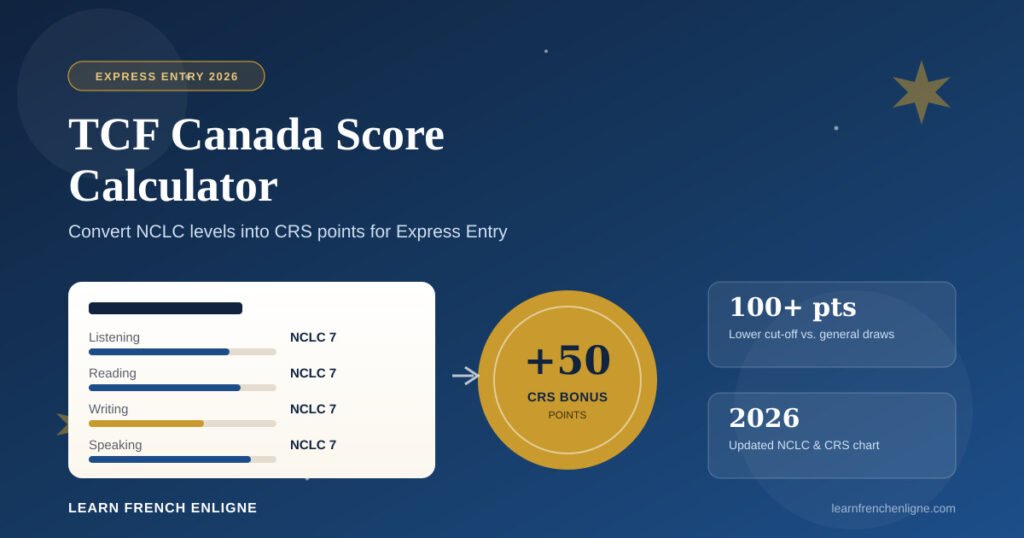
If French is part of your Express Entry strategy, the TCF Canada score calculator is the tool that turns a page of raw numbers into a decision you can actually act on. Since IRCC removed job offer points from the Comprehensive Ranking System in March 2025, French proficiency has become one of the few remaining levers candidates can control — and one of the most powerful. French category draws have run with CRS cut-offs as low as the high 370s to low 400s through 2025 and 2026, compared with 500+ for general draws. That gap is often worth more than a master’s degree or several years of extra work experience.
French Course for Canada PR:Your Complete 2026–2027 Guide

The bottom line upfront: If you are planning to immigrate to Canada through Express Entry, French is one of the fastest and most reliable ways to improve your profile. Achieving CLB 7 / NCLC 7 in French can add up to 50 CRS points to your score — and also open access to dedicated French-language category draws where the cut-off is often significantly lower than general draws. This guide walks you through why French matters, which level to target, which exam to take, how long it takes, and how LFE’s TEF Canada Mastery Program gets you there
TCF Québec vs TCF Canada:The Complete Difference Guide
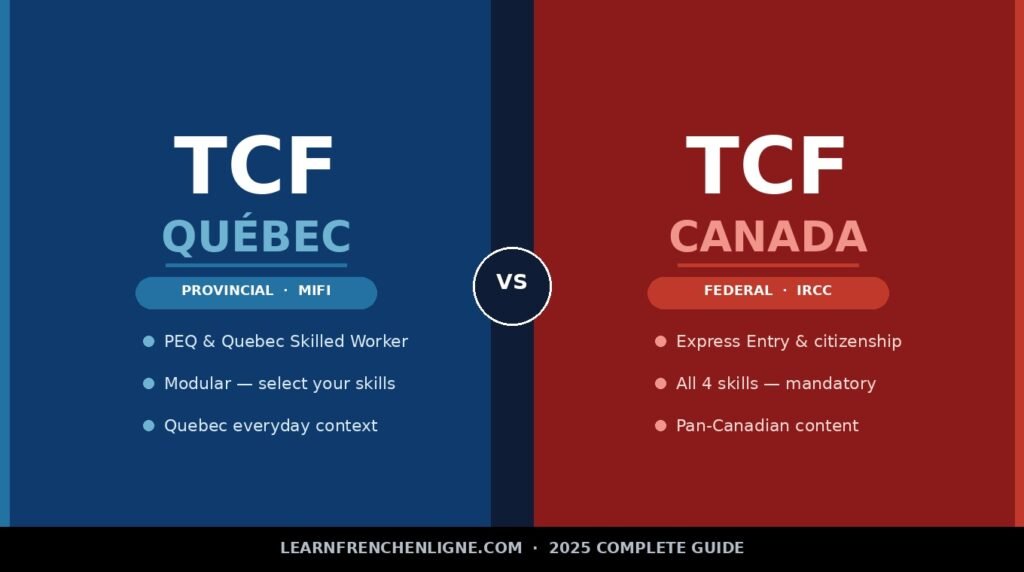
Every year, thousands of French learners begin their Canadian immigration journey by typing “TCF exam” into a search engine — and then booking the wrong one. TCF Québec and TCF Canada are administered by different authorities, accepted by different programs, and structured differently. Mixing them up can cost you weeks, money, and potentially your immigration application.