
False Friends (Faux Amis) That Trip Up English Speakers
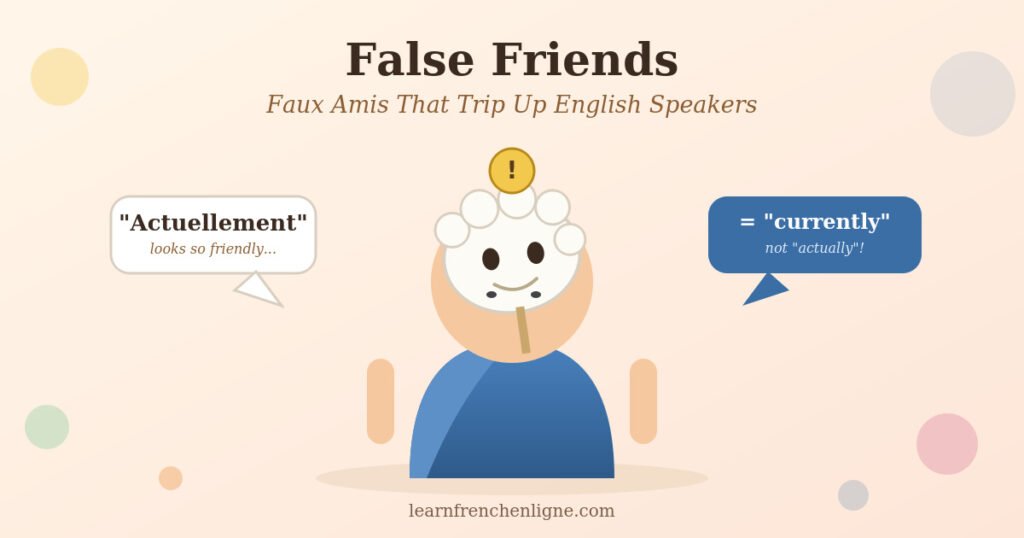
You spot a French word that looks exactly like an English one, so you use it with total confidence — and a native speaker gives you a confused look. Welcome to the world of faux amis, or “false friends”: words in French and English that share a spelling or sound but mean something completely different. They’re one of the sneakiest traps in language learning precisely because they don’t feel like mistakes. They feel like shortcuts.
This guide rounds up the false friends that catch English speakers most often, organized by how badly they can backfire, plus a few tricks for spotting new ones on your own.
French Noun Gender Rules: Patterns and Exceptions Every Learner Should Know
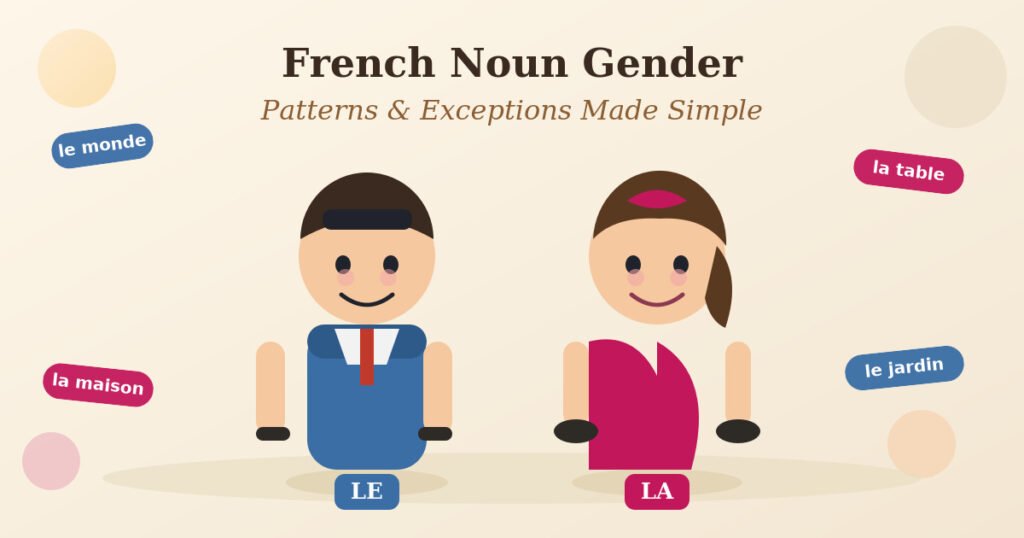
Ask any French learner what trips them up first, and “le or la?” comes up almost every time. Unlike English, every single French noun carries a gender — masculine or feminine — and that gender changes the article, the adjective endings, and sometimes even the pronoun you use later in a sentence. Get the gender wrong and a sentence that should sound natural suddenly feels shaky.
Passé Composé vs. Imparfait: The Ultimate Guide to French Past Tenses

If you’ve ever frozen mid-sentence in French wondering whether to say “j’ai mangé” or “je mangeais,” you’re not alone. The battle between passé composé and imparfait is one of the most common stumbling blocks for French learners at every level. The good news? Once you understand the logic behind each tense, the confusion disappears for good.
DELF Exam Preparation: Format, Strategies, and a Study Plan That Actually Works
If you’re staring down a DELF exam date and wondering where to even start, you’re not alone. The DELF (Diplôme d’Études en Langue Française) is one of the most widely recognized French proficiency certificates in the world, and its four-skill format — listening, reading, writing, and speaking — can feel overwhelming without a clear plan.
Ne Explétif in French: The “Ne” That Doesn’t Mean No
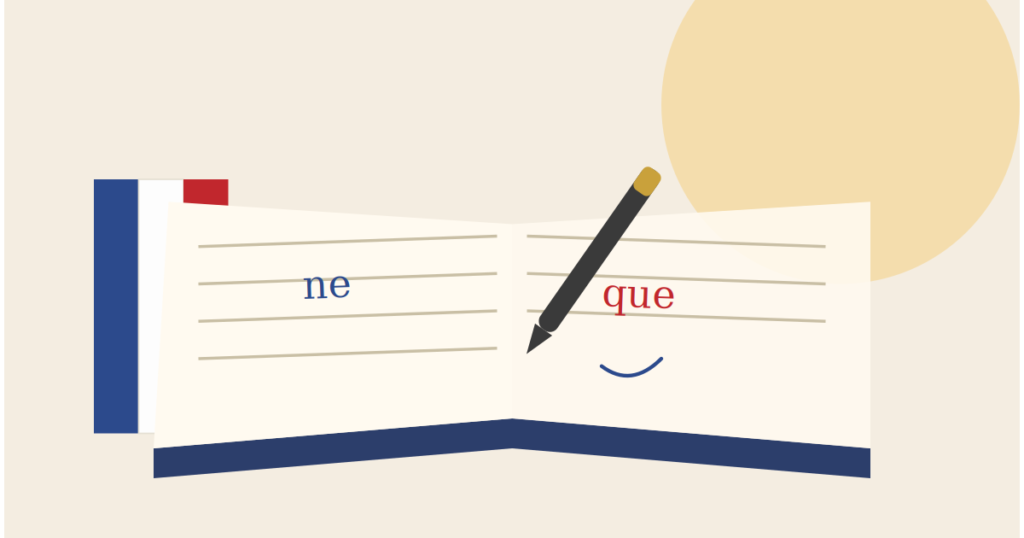
If you’ve ever read a French novel, a formal email, or an advanced listening transcript and spotted a lonely little ne sitting in a sentence that already seems positive, you’re not imagining things — and you haven’t misunderstood the grammar. You’ve just met the ne explétif, one of the most misunderstood corners of French syntax.
How Long Does It Take to Learn French Fluently? A Realistic Timeline for 2026

If you’ve typed “how long does it take to learn French” into Google at 1 a.m. while staring at a TEF Canada deadline, you’re not alone. It’s one of the most common questions we get at Learn French Enligne (LFE), and honestly, the honest answer is: it depends on your level, your consistency, and your goal — a weekend traveller and a candidate targeting CLB 7 for Canada PR are not on the same clock.
DELF Writing Tips

The DELF writing section evaluates your ability to communicate clearly in French. Many students struggle not because of vocabulary, but because they lack structure and strategy.
In this guide, you will learn step-by-step techniques, templates, and real examples to master emails, letters, and essays for DELF A1 to B2.
DELF A1 to B2 Roadmap for Beginners

Learning French from zero can feel confusing in the beginning. Many students ask the same question: “Where should I start, and how do I reach DELF B2?”
This complete DELF A1 to B2 roadmap will help beginners understand each level, what to study, how long it may take, and how to prepare step by step for the DELF French exam.
DELF B1 Writing
In the DELF B1 production écrite, you usually need to write a text of around 160 to 180 words. The task often asks you to express an opinion, present arguments, describe a situation, or react to a social issue.
At this level, the examiner wants to see whether you can communicate clearly, organize your ideas logically, use relevant vocabulary, and connect arguments with the right expressions.