

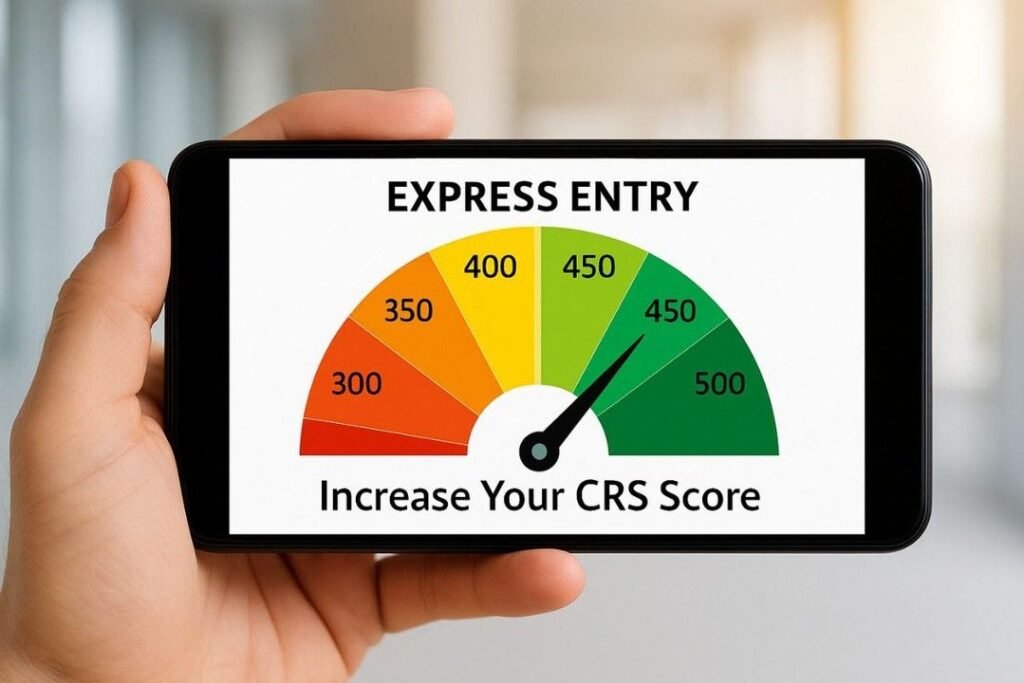
For many professionals planning immigration to Canada, learning French can become a powerful advantage. Strong scores in exams like TEF Canada or TCF Canada can significantly boost your Comprehensive Ranking System (CRS) points under Express Entry.
But here’s something surprising that many candidates discover too late:
Most people who fail the TEF exam don’t fail because their French is weak.
After working with hundreds of candidates preparing for French proficiency tests, one pattern becomes clear again and again. Many learners can communicate comfortably in French, understand conversations, and even write decent emails or essays. Yet when they sit for the exam, their scores fall far below their expectations.
So what’s going wrong?
The truth is simple but often overlooked: the problem isn’t the language — it’s the strategy.

The Hidden Gap Between Knowing French and Passing the Exam
Many learners approach TEF Canada preparation the same way they would approach learning French in general.
They focus on:
- Improving vocabulary
- Revising grammar rules
- Watching French videos
- Practicing casual conversations
All of these are valuable for language learning. But the TEF exam is not just about language proficiency — it’s about exam performance.
This means understanding things like:
- The marking grid used by examiners
- The structure of each section
- The time pressure in listening and reading tasks
- The specific expectations for speaking and writing responses
Without this understanding, even candidates with solid French skills can struggle to convert their knowledge into a high score.

A Story I See Again and Again
Let’s take the example of Rahul, an IT professional preparing for TEF Canada to increase his CRS score for Express Entry.
Rahul had studied French for nearly a year. He could easily hold conversations like:
“Bonjour, je travaille dans le domaine informatique et je souhaite immigrer au Canada.”
He watched French YouTube channels, listened to podcasts, and even chatted with French-speaking friends online.
But when he attempted the TEF exam, his score placed him at CLB 5 — far below the CLB 7 level he needed to gain additional immigration points.
What went wrong?
After reviewing his exam performance, the problem wasn’t vocabulary or grammar. It was execution:
- He ran out of time in the reading section.
- His speaking responses lacked the structure examiners expect.
- His writing answers were clear but not aligned with the evaluation criteria.
Rahul didn’t lack French skills.
He lacked exam strategy.
The Listening Section Shock
Another common challenge appears in the listening section.
Many candidates practice with slow or conversational French. But in the real TCF Canada or TEF exam, the audio can feel surprisingly fast and dense.
Candidates often say things like:
“I understood the topic, but I missed the key details.”
The issue is not comprehension ability. It’s processing speed under exam pressure.
Listening questions are designed with traps, such as:
- Distracting options that sound correct
- Similar vocabulary with different meanings
- Fast transitions between ideas
Without targeted listening practice, candidates struggle to capture the precise information required to answer correctly.
The Speaking Section: Where Many Lose Points
The speaking module is another area where candidates often lose valuable marks.
In real life, many learners can communicate comfortably in French. But the TEF Canada speaking test evaluates more than just communication.
Examiners assess things like:
- Argument structure
- Clarity of ideas
- Vocabulary range
- Fluency and coherence
For example, a candidate might respond to a question with:
“Je pense que c’est une bonne idée parce que c’est pratique.”
While this sentence is grammatically correct, it’s too simple for higher scoring bands.
A stronger response would include structured reasoning, examples, and varied vocabulary. Without training on how to structure responses, candidates unintentionally limit their scores.
Random Preparation Is a Major Problem
Another pattern I often see is unstructured preparation.
Many candidates prepare using a mix of:
- Random YouTube videos
- Free online exercises
- Old exam papers without feedback
While these resources can help, they rarely provide structured progress or personalized correction.
As a result, candidates unknowingly repeat the same mistakes:
- Writing essays that don’t match the exam format
- Speaking without clear arguments
- Misinterpreting question instructions
Because no one corrects them, the errors become habits — and those habits show up during the exam.
The Difference Between CLB 5 and CLB 7
For immigration through Express Entry, even a small improvement in language scores can significantly increase CRS points.
But the difference between CLB 5 and CLB 7 is often misunderstood.
It’s rarely about knowing more vocabulary.
Instead, it’s about:
- Managing time effectively
- Structuring responses properly
- Understanding examiner expectations
- Performing under exam pressure
Candidates who cross that gap usually do so by improving their test strategy, not by relearning the entire language.
Why Mock Exams Make the Biggest Difference
One of the most powerful tools in TEF preparation is realistic mock testing.
Many candidates underestimate how different the real exam feels.
The first time they experience:
- strict time limits
- complex listening sections
- structured speaking prompts
they feel overwhelmed.
Regular mock exams help learners:
- build time management skills
- become familiar with the exam format
- identify weak areas early
- gain confidence before test day
Mock practice transforms preparation from general language learning into targeted exam readiness.

The Real Question Every Candidate Should Ask
When preparing for TEF Canada or TCF Canada, most candidates focus on one question:
“How good is my French?”
But the better question is:
“Am I preparing the right way for this exam?”
Because success in language tests is rarely just about knowledge — it’s about applying that knowledge effectively within the exam framework.
Final Thoughts
For many applicants aiming for permanent residency in Canada, French language scores can make a life-changing difference in their immigration journey.
But strong results in exams like TEF Canada don’t come from language ability alone.
They come from understanding how the exam works, how it’s evaluated, and how to perform under pressure.
So if your scores don’t reflect your true level of French, don’t assume the problem is your language skills.
Sometimes, the real problem isn’t French at all.
It’s simply strategy.