
Studying in France: The French Level You Need and How to Prove It (DELF, TCF, TEF)
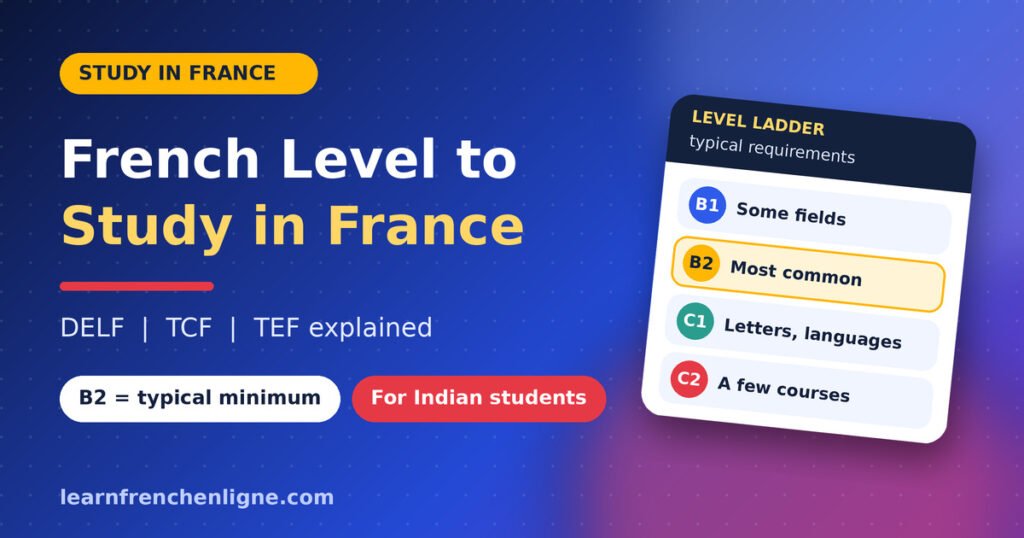
Wondering about the French level required to study in France? The honest answer is: it depends on your programme. Some degrees are taught entirely in English and need no French at all. Many others are taught in French and expect around B2, proven by a recognised test. This guide explains the levels universities typically ask for, how DELF, DALF, TCF and TEF compare, which one to choose, and how to plan your preparation so your result is ready before your application deadline.
How to Get CLB 5 in French in 4 Months: A Realistic Study Plan

Many Canada-bound learners need CLB 5 in French but do not have a year to spare. Maybe a job offer depends on it, or an Express Entry profile needs a language score soon. The good news: four months is a workable timeline for many people, provided you start with some basic French and study in a structured way. This guide explains what CLB 5 means, the official TEF Canada and TCF Canada scores you need, who can realistically hit the target in four months, and a month-by-month plan you can follow starting today.
Express Entry French Draws: How They Work, What CRS to Expect and How to Qualify
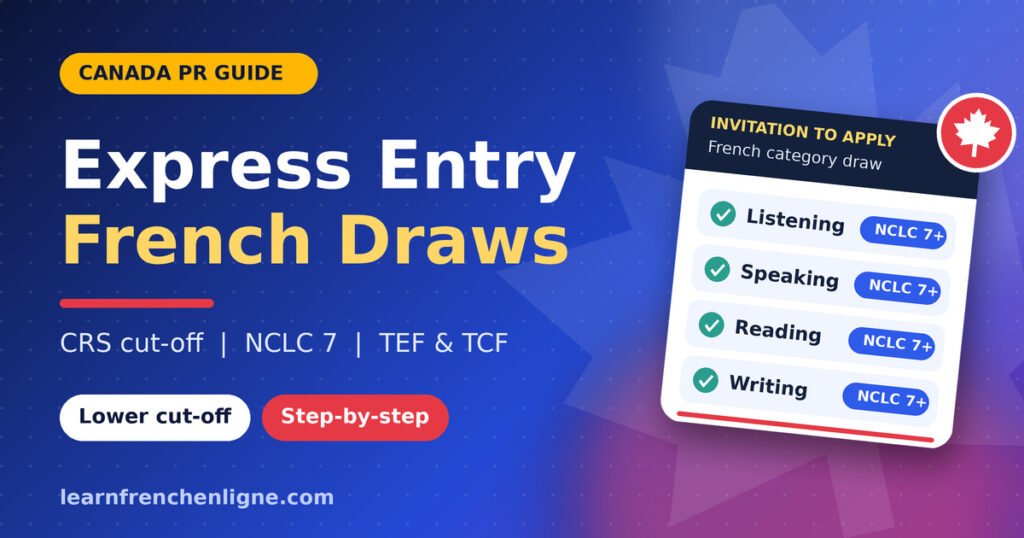
If you are building a Canada PR profile, you have probably noticed that some Express Entry rounds invite candidates at a much lower CRS score than others. Those are often the Express Entry French draws, and they are one of the biggest reasons French has become the most powerful “extra” skill for Indian applicants. In this guide you will learn what a French draw is, who is eligible, what CRS score to realistically expect, and exactly what you need on the TEF Canada or TCF Canada to be in the next round.
Canada PR Through French: How Chandigarh Students Are Turning Language Skills into an Immigration Advantage

Chandigarh has one of India’s oldest and most active Canada-immigration cultures. Walk through Sector 34 or the education hubs around Panjab University and you’ll find IELTS coaching centres on nearly every street. What’s changed in the last two years isn’t the destination — it’s the route. A growing number of Chandigarh applicants are discovering that French, not a higher IELTS score, is the faster way to a Canada PR invitation.
French Words for Travel: 100+ Essential Words & Phrases for Your First Trip to France

Picture this: you land in Paris, walk into a bakery and say a confident “Hello!” in English. The person behind the counter answers politely but a little coolly. Now imagine you had said “Bonjour, madame” first. Same bakery, completely different mood.
That small difference is what this guide is about. You do not need to be fluent to enjoy France, Belgium, Switzerland, Québec or any French-speaking destination. You need about a hundred useful words, the right manners and a bit of pronunciation confidence. Below you will find them sorted by situation, so you can find what you need in seconds, even on a moving train.
French Slang: 40+ Words & Expressions to Sound Like a Local (With English Equivalents)

Textbook French will get you through a hotel check-in. It won’t get you through a conversation between two French friends catching up over coffee. That gap — between classroom French and the French people actually speak — is exactly what slang fills, and the fastest way to close it is to stop translating literally and start mapping each French slang word onto the English slang you already use every day.
French Translator Jobs: Opportunities for Beginners & Professionals

French translation work looks completely different depending on where you’re standing. A beginner is usually asking “how do I land my first paid project?” while an experienced translator is asking “which specialisation actually pays best?” Both are valid questions — they just need different answers.
Online vs Offline French Classes: Which One Actually Works Better?

This question doesn’t actually have one right answer — and most institutes that have taught French for years, offering both formats side by side, seem to have quietly figured that out too. The honest answer is that “which is better” depends less on the format itself and more on how you personally learn, how disciplined your schedule is, and what you’re preparing for.
Instead of picking a side, this guide breaks down exactly where each format genuinely wins — so you can match the format to yourself, not the other way around
French Direct & Indirect Object Pronouns Explained Simply: le, la, les, lui, leur

If you’ve ever written a French sentence and instinctively put the pronoun after the verb — the way you would in English — you’ve hit the single most common intermediate-level mistake in French grammar. Direct and indirect object pronouns (le, la, les, lui, leur, and their relatives) don’t just replace nouns; they also move to a completely different position in the sentence. This guide breaks the system down clearly, with the word-order rule explained once and for all.
Les Connecteurs Logiques en Français : Guide Complet du Niveau A1 à C1

Les connecteurs logiques sont les petits mots — souvent négligés à l’apprentissage — qui font toute la différence entre un texte scolaire et un texte qui coule naturellement. Ils relient les idées, marquent une opposition, introduisent une cause ou une conséquence, et donnent à votre discours une vraie structure argumentative. Que vous prépariez le DELF, le TEF ou simplement une conversation fluide, maîtriser les connecteurs par catégorie — plutôt que de les apprendre en vrac — change complètement votre progression.