
False Friends (Faux Amis) That Trip Up English Speakers
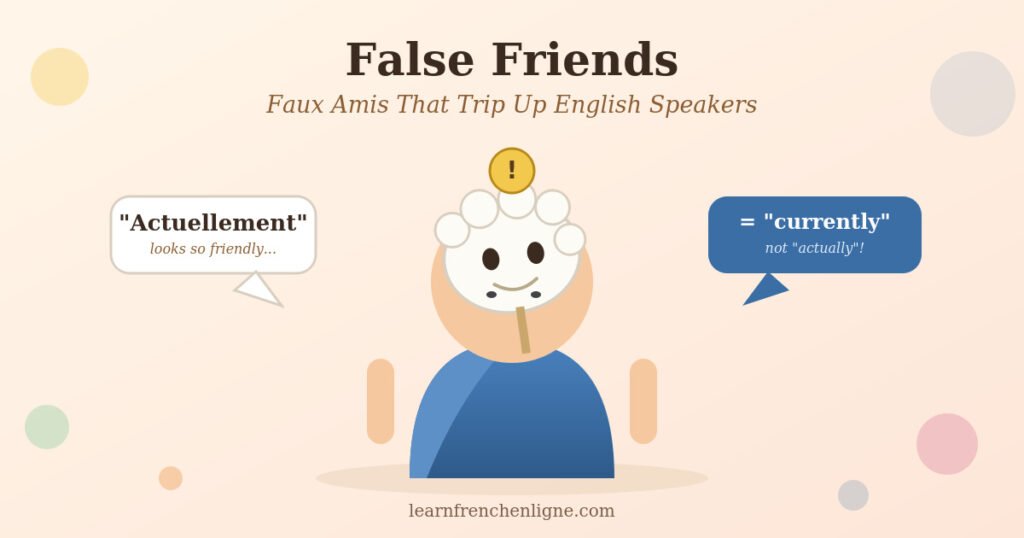
You spot a French word that looks exactly like an English one, so you use it with total confidence — and a native speaker gives you a confused look. Welcome to the world of faux amis, or “false friends”: words in French and English that share a spelling or sound but mean something completely different. They’re one of the sneakiest traps in language learning precisely because they don’t feel like mistakes. They feel like shortcuts.
This guide rounds up the false friends that catch English speakers most often, organized by how badly they can backfire, plus a few tricks for spotting new ones on your own.
French Noun Gender Rules: Patterns and Exceptions Every Learner Should Know
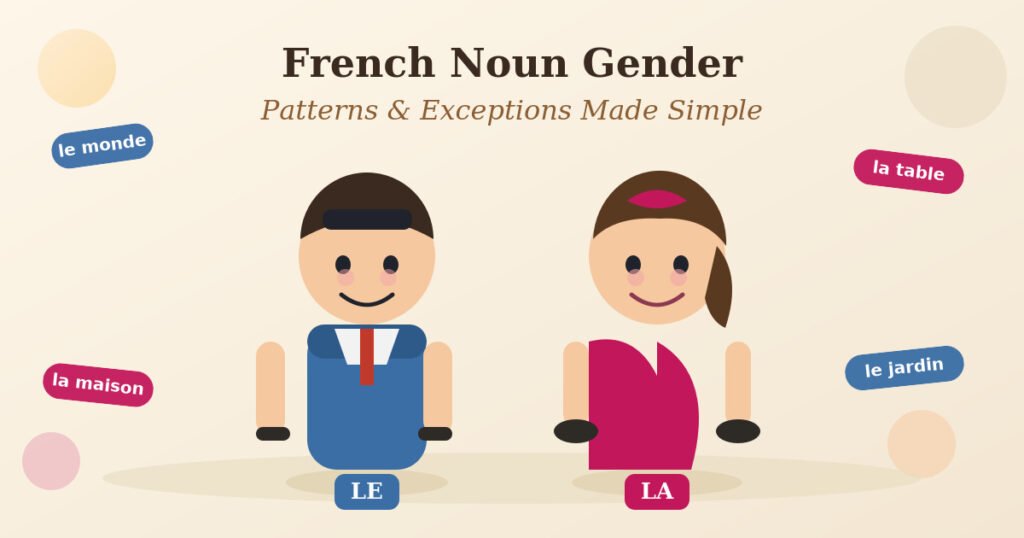
Ask any French learner what trips them up first, and “le or la?” comes up almost every time. Unlike English, every single French noun carries a gender — masculine or feminine — and that gender changes the article, the adjective endings, and sometimes even the pronoun you use later in a sentence. Get the gender wrong and a sentence that should sound natural suddenly feels shaky.