

For thousands of immigration applicants every year, the dream of moving to Canada depends on one critical factor—the CRS score. Many candidates work hard to improve their English proficiency, gain work experience, or pursue higher education to increase their score.
However, there is one powerful strategy that many applicants overlook: learning French.
Under the Express Entry, candidates who demonstrate strong French language skills can earn up to 50 additional Comprehensive Ranking System (CRS) points. In a highly competitive immigration pool, these extra points can significantly improve your chances of receiving an Invitation to Apply (ITA) for permanent residency.
In this guide, we will explore how French for Canada PR works, how many points you can gain, and why learning French is becoming one of the smartest immigration strategies.
Understanding the Express Entry System
Before discussing how French adds points, it’s important to understand how the Express Entry system works.
Express Entry is Canada’s primary immigration system used to manage applications for skilled workers under programs such as:
- Federal Skilled Worker Program
- Canadian Experience Class
- Federal Skilled Trades Program
Candidates create an online profile and receive a CRS score based on several factors, including:
- Age
- Education
- Work experience
- Language proficiency
- Adaptability
The higher your score, the greater your chances of receiving an invitation for permanent residency (PR).
This is where language skills play a major role.
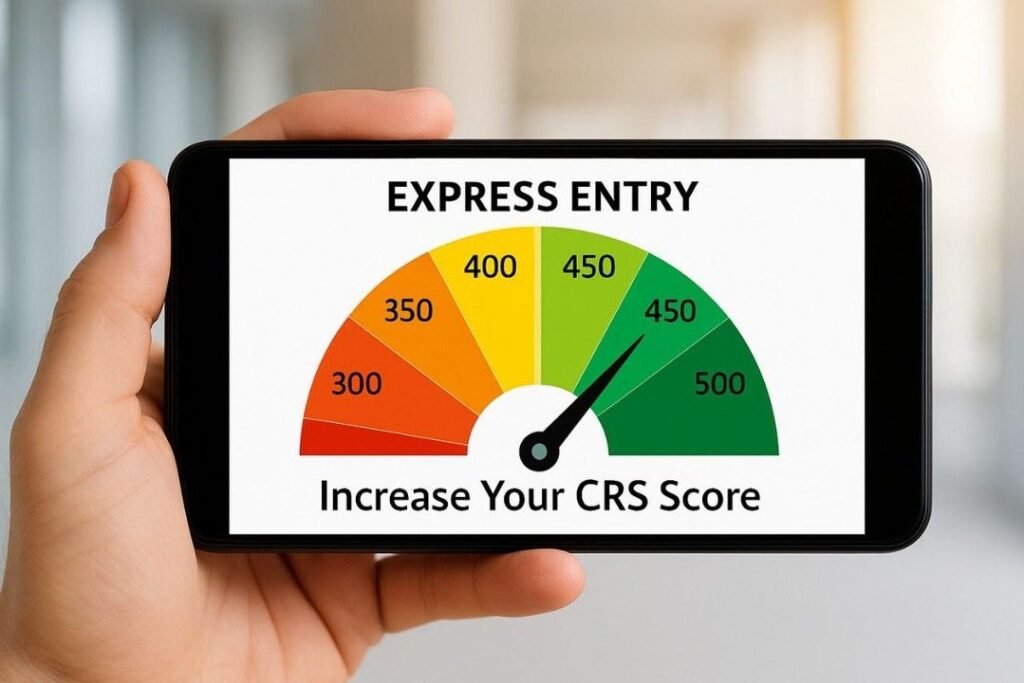
How Many Points Does French Add for Canada PR?
Under the Express Entry, candidates can earn up to 50 additional CRS points for strong French proficiency.
These points are awarded when candidates demonstrate good results in a recognized French language exam such as TEF Canada.
Here is how the bonus works.
Up to 25 Points for Strong French Skills
Candidates can receive 25 additional CRS points if they demonstrate:
- Strong French proficiency
- Moderate English proficiency
This means that even if English is your primary language, adding French can still significantly increase your CRS score.
Up to 50 Points for Strong French and English
Applicants can receive 50 additional CRS points if they demonstrate:
- High proficiency in French
- Strong English language scores
This combination is extremely valuable because Canada encourages bilingual immigrants who can contribute to both English and French-speaking communities.
Why French Is Becoming a Strategic Advantage for Canada PR
In recent years, Canada has been actively promoting Francophone immigration outside Quebec. The government aims to increase the number of French-speaking immigrants across provinces such as Ontario, Manitoba, and New Brunswick.
This policy means that French speakers often benefit from:
- Additional CRS points
- Special immigration programs
- Provincial nomination opportunities
- Strong employment prospects in bilingual workplaces
As a result, many immigration consultants now consider French proficiency a strategic advantage for Express Entry candidates.

The Role of TEF Canada in Immigration
To claim CRS points for French, candidates must take an approved language exam such as TEF Canada.
TEF Canada evaluates four key language skills:
- Compréhension écrite (reading)
- Compréhension orale (listening)
- Expression écrite (writing)
- Expression orale (speaking)
Your scores are converted into CLB levels (Canadian Language Benchmark), which determine how many CRS points you receive.
The higher your CLB level, the more points you can earn in the Express Entry system.
How French Can Improve Your CRS Score
Many candidates in the Express Entry pool fall within a narrow score range. For example, a candidate with a score of 460–480 CRS points may remain in the pool for months waiting for an invitation.
Adding French proficiency can dramatically change that situation.
For example:
- A candidate with 470 CRS points
- Gains 25–50 points for French
Their score can rise to 495–520, which significantly increases the chances of receiving an Invitation to Apply.
This is why immigration experts often describe French as a CRS score booster.
Additional Benefits of Learning French for Canada
Beyond immigration points, learning French offers several long-term advantages for newcomers to Canada.

Better Job Opportunities
Many Canadian companies value bilingual professionals who can work in both English and French environments. Speaking French can open opportunities in sectors such as:
- Government services
- International business
- Customer relations
- Tourism and hospitality
Access to Francophone Communities
Canada has vibrant French-speaking communities outside Quebec. Cities like Ottawa, Moncton, and parts of Ontario actively support Francophone culture and employment opportunities.
Being able to communicate in French helps immigrants integrate more easily into these communities.
Long-Term Career Growth
Bilingual professionals often have access to leadership roles and international projects. French proficiency therefore becomes not just an immigration strategy but also a career investment.
Is Learning French Difficult for Immigration Applicants?
One of the biggest concerns for applicants is whether learning French is realistic while preparing for immigration.
The answer depends on the preparation strategy.
Many candidates successfully reach the required level by focusing on:
- Structured language training
- Exam-oriented preparation
- Consistent practice in speaking and listening
With the right guidance and study plan, achieving a strong score in TEF Canada is achievable within a few months.
How Language Training Can Help
Preparing for a language exam is easier when candidates follow a structured preparation program. Many learners choose professional training institutions such as Lingua Nest Pvt. Ltd., which provide targeted coaching for French language exams.
Structured preparation often includes:
- TEF-focused training modules
- Practice tests and mock exams
- Speaking practice sessions
- Personalized feedback from trainers
These programs help candidates improve both their language proficiency and exam strategy

Should You Learn French for Canada PR?
If your goal is to increase your CRS score and improve your chances of immigration, learning French can be one of the most effective steps you can take.
French proficiency offers:
- Up to 50 additional CRS points
- Greater immigration opportunities
- Access to bilingual job markets
- Strong long-term career benefits in Canada
For many applicants, adding French skills can transform their immigration profile and significantly improve their chances of receiving an Invitation to Apply.
Final Thoughts
The competition in the Express Entry pool continues to grow every year. As more candidates apply, improving your CRS score becomes increasingly important.
Learning French is no longer just an additional skill, it has become a strategic advantage for immigration.
By preparing for exams like TEF Canada, candidates can unlock valuable CRS points and increase their chances of achieving their dream of Canadian permanent residency.
Sometimes, the smartest immigration strategy isn’t simply improving your English score—it’s becoming bilingual and standing out in the Express Entry system.